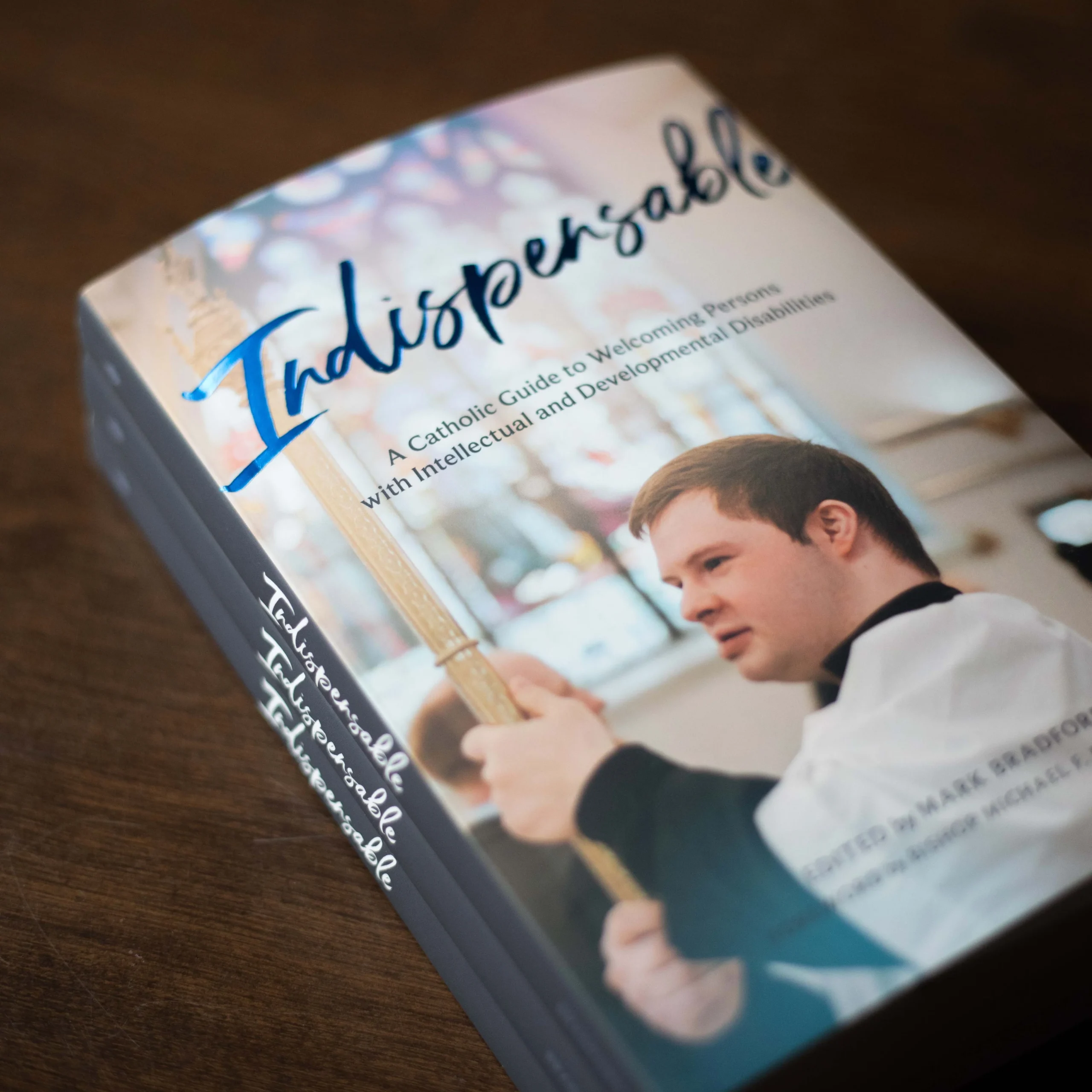
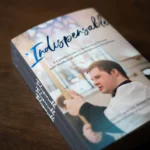
I wrote one chapter of Indispensable: A Catholic Guide to Welcoming Persons with Intellectual and Developmental Disabilities. It came out in September, but I only managed to finish reading the rest more recently. I want to provide a summary of it here: in general, then in specifics, and then a sample of my chapter. I highly recommend buying this book if you are involved in this ministry. The book is on Catholic ministry involving people with such disabilities, and my chapter is on a sensory-friendly liturgy.
As with any book that has a different author for every chapter, the individual chapters don’t have the same style and aren’t as interconnected. You can read only a few chapters if that is your focus. The book is very well focused on a single topic, so people who are interested in one topic are likely interested in most. It follows a relatively natural flow.
Many of the authors are academics or at least with advanced degrees. However, this is clearly not a purely academic book. It manages to bring in a few points of quite advanced theology while remaining quite readable. However, I would generally recommend this for those who either have experience in disability ministry or at least a basic academic background. Indispensable manages to thread the line between academic and popular works.
It deals with a wide variety of topics from more principled aspects to more practical ones, and from parental pregnancy to ministry for adults with disabilities.
Specific Chapters of Indispensable
I will run through the chapters in order, but the amount I cover each will vary significantly.
Miguel Romero: “Wonderfully Made: Creation, Human Dignity, and the Gift of Vulnerability”
Professor Romero begins with a powerful principled chapter. It is one of the best explanations of the fundamental aspects of how we disabled people have full dignity. He gets one of the only pull quotes I bookmarked:
Properly Christian and distinctly Catholic theological reflection on the dignity and destiny of the human being begins and presumes the absolute goodness, truth, and beauty of the Creator: the Triune God, above all descriptions. (p. 7)
He takes this to point out that this goodness applies to people with disabilities as well. God made every human in absolute goodness, truth, and beauty.
Romero also gets into the idea of vulnerability, which we all share as human beings, but is often most prevalent in those of us with disabilities. We demonstrate human vulnerability for all.
Mark Bradford: “Understanding Disability”
Bradford provides a more pastoral introduction to parallel Dr. Romero’s more theoretical introduction. This provides people who are not as familiar with a path to look at disability ministry. He provides good descriptions and distinctions.
Charleen Katra: “Church Documents on Disability Ministry”
This provides a good outline of what the Church has said about disabilities and ministries to people with them. This provides a good presentation for those who are new to this area or have only dealt with more practical matters of disability ministry before.
I personally did not learn much new in these two chapters by Bradford and Katra. However, I think they are a good introduction for those not familiar. I doubt I am the intended audience.
Tracy Windsor and Bridget Mora: “Pastoral Care of Parents Experiencing a Prenatal Diagnosis,” and Kathryn R. Grauerholz: “Counseling Perinatal Loss”
These two chapters deal with pastoral care for parents before their children are born. This is important as many parents have to deal with this. I think it is a key part of our pro-life ministry. We have a society that kills the majority of babies diagnosed prenatally with Trisomy-21 (Down’s). I have written about the dangers coming as prenatal autism tests become more accurate and prevalent. Windsor and Mora have the other pull quote I grabbed:
Contrary to what medical providers may presume, it is carrying to term that offers mothers [whose babies were diagnosed prenatally with disabilities] the best psychological and emotional outcomes. Studies have shown there is a psychological benefit to mothers who choose to continue their pregnancy following a diagnosis. (p. 51)
This is a reminder that the Catholic view on abortion also helps mothers, not just babies.
Deacon Lawrence Sutton: ‘The Sacraments and Persons with Disabilities: Insights and Challenges”
This is another chapter that I felt was very good, but I already knew. Deacon Sutton has written several books on practical ministry to autistics. I think he provides a good summary of what the USCCB says on the matter along with practical ideas to put this into practice.
(My Chapter: See Below)
Anne Masters: “The Voice of Nonspeaking Individuals – Indispensable to the Body of Christ”
This is a more academic article but a valuable more theoretical contribution to the discussion of disability ministry. In challenges our default understanding of what is meant by communication, by addressing non-speakign individuals. It encourages parishes to be supportive and welcoming places.
Michael J. Boyle: “Opportunities and Challenges in Educating Students with Disabilities in Catholic Schools”
There is a real challenge with Catholic schools and disabled students: they simply cost more to educate. Public schools get more money, but Catholic schools would struggle to pass on the added costs to parents.
On the other hand, we have a duty to those on the margins, such as students with disabilities.
Boyle provides multiple aspects to do this better: spiritual motivation, practical application on site, and rules on special education law that can help fund it.
Mary O’Callaghan: “Male and Female He Created Them: Human Sexuality, Relationships, and Disability”
There is a real issue in a lack of sexual education for disabled people that aligns with Catholic teaching. Most available sexual education for autistics or those with other intellectual and developmental disabilities is extremely progressive. These tend to promote things like LGBTQ identities even more than standard public school texts.
Dr. O’Callaghan wants to address this issue. She presents a view of how to create a course on sexual education in line with Church teaching while fitting with those with various intellectual and developmental disabilities. This chapter provides the theoretical background for a course she actually produced.
Mark Bradford: “Creating a Place of Belonging in the Parish for Persons with Disabilities”
Bradford provides a good conclusion to Indispensable, motivating all to apply what the book has covered. Some topics are a little theoretical, but they have practical applications.
My Chapter in Indispensable: “A Liturgy for Autistics and Others with Disabilities”
When I was a teenager, and long before I knew I was autistic, I convinced my mom to take me across town for the only Life Teen Mass in town. Before the Mass started, they reviewed the songs with the congregation and people were already putting their hands in the air. The music was loud all throughout the Mass and I felt uncomfortable. My mom could tell. I never went back, and she never suggested I return. I’m sure such a Mass experience helps some know, love and serve Jesus, but I knew it was not for me. When I was diagnosed with autism many years later as a priest, I understood part of why this was so uncomfortable for me: It was because the sensory experience went outside where I was comfortable.
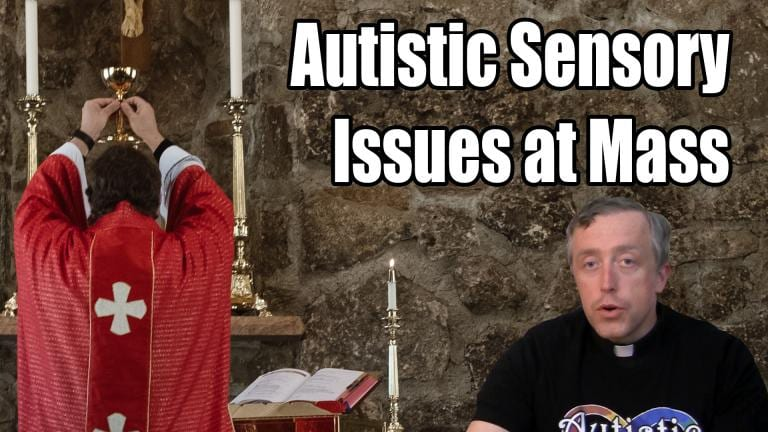
One of the usual effects of autism, and several other disabilities, is unusual sensitivity to sensory input. Autistics typically need a much smaller range of sensory stimulation. Some will need to be constantly bear-hugged but others will barely want you to touch them. My own range is close enough to normal that sensory stimulation isn’t usually an issue—although I never step outside even on a cloudy day without sunglasses or I get a sensory-overload headache quickly. […]
Attitudes Towards Disabled People at the Liturgy
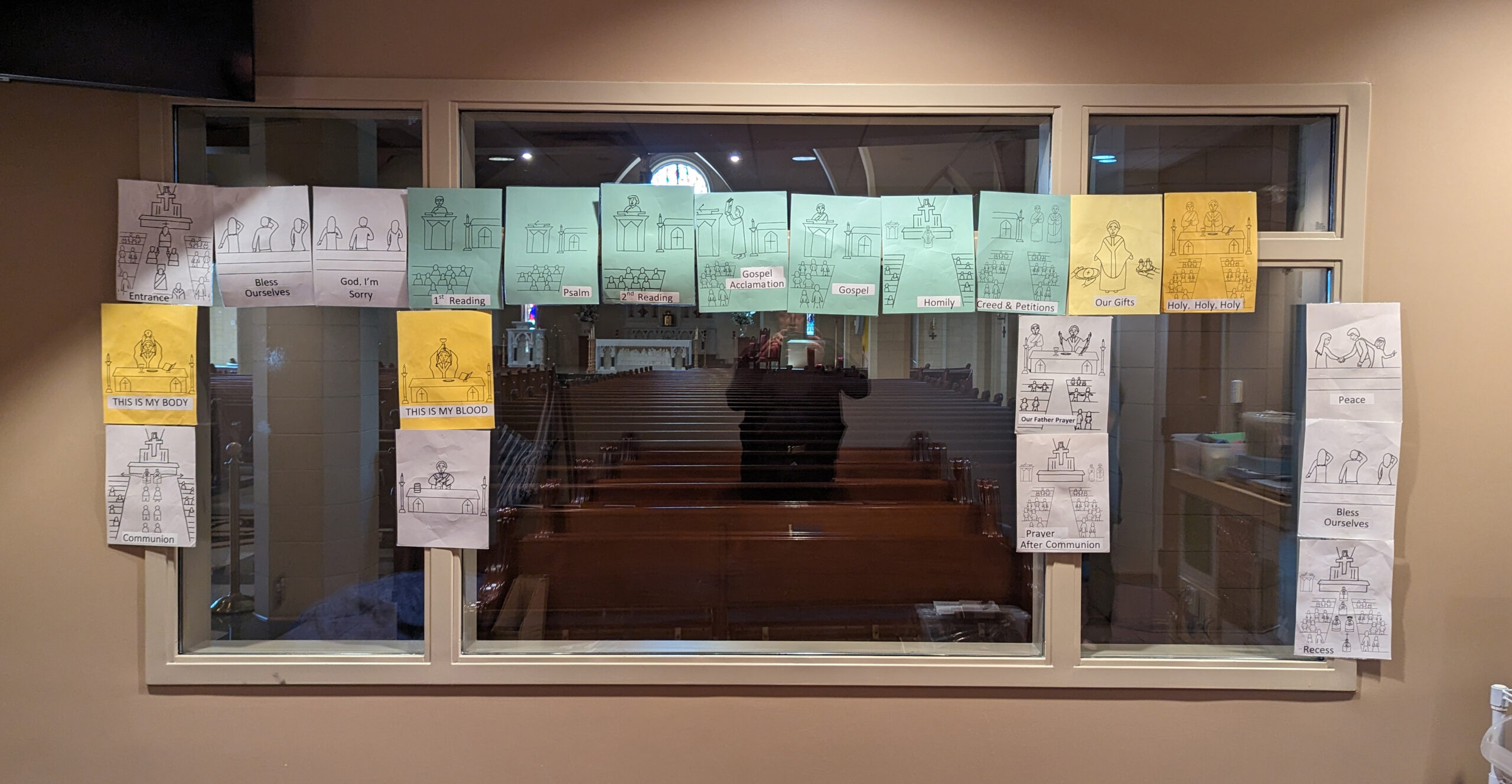
Pictures from Aimee O’Connell of the sensory-friendly room in Rochester, NY. Center: the set-up to watch the Mass on screen. Others clockwise from top-left: the sign on the door (only external indication), candle and image atop a bookshelf, warning to the room across the hall, and bean bag chairs.
The biggest challenge for any newcomer with a disability in a liturgical setting is the othering they may experience. Othering happens when the disabled person, even though part of the Church, is treated as an outsider or someone “other” than the rest of the Church. This is often intensified for disabled people whose body or brain makes us behave differently. Because “normal” behavior is the default expectation, disabled people are made to feel out of place, and are thus othered. Othering is mostly an attitude of those in the Church who have been influenced by stereotypes, or prejudices toward disabled people. Its result is marginalization. If these attitudes can be resolved in a parish community, then more practical challenges of including people with disabilities in the parish tend to be resolved easily.
This section will look at othering through various lenses to see how attitudes can be changed and autistic and other disabled people included.
Some distinctions between persons are essential. For example, non-Catholics are not permitted to receive Holy Communion at Mass. The issue of othering, however, is different. It is making an us-them distinction on inadequate grounds. Summer Kinnard notes that, “Just as humans, male and female, are made in God’s image and can be holy, so people without and with disabilities are made in God’s image and can be holy.” [Summer Kinard, Of Such Is the Kingdom: A Practical Theology of Disability]
The challenge for our parishes is to welcome the differences of those who want to belong to the Church and live her life as part of the “us” of the Church. We are all baptized members of the Body of Christ: people of different races, languages—and abilities.
The Church must be open to those whose disabilities make them different; people like autistics whose disability requires some slight modifications to accommodate their sensory needs. The physical accommodations needed are often not that significant, but the negative attitudes disabled people often perceive from others when accommodations are made is something needing a significant change. People tend to measure others’ bodies in terms of aesthetics and function—areas where those with disabilities differ— rather than viewing all persons as created in the image and likeness of God where we are all the same. If attitudes toward people can change, then any physical accommodations will be more easily accepted. This change of mental paradigm makes the practical elements easy to do.
You can get a hint at this from three articles I published in mid-2024 about sensory-friendly Masses located in in Rochester, NY, Fort Wayne, IN, and near Atlanta. These were places that have done this for a few years, while most other articles were just new places doing it.
Conclusion
Overall, I highly recommend that people who are interested in this area read Indispensable. It is a good place to start looking at ministry in this area. The best deal is currently on Amazon, but Word on Fire carries Indispensable too, which likely works better if ordering it for a whole team.
[…] The Archdiocese of Cincinnati has a good summary on what is involved; several years after the initial post, I wrote a chapter in a book giving a fuller description. […]






[…] The Archdiocese of Cincinnati has a good summary on what is involved; several years after the initial post, I wrote a chapter in a book giving a fuller description. […]